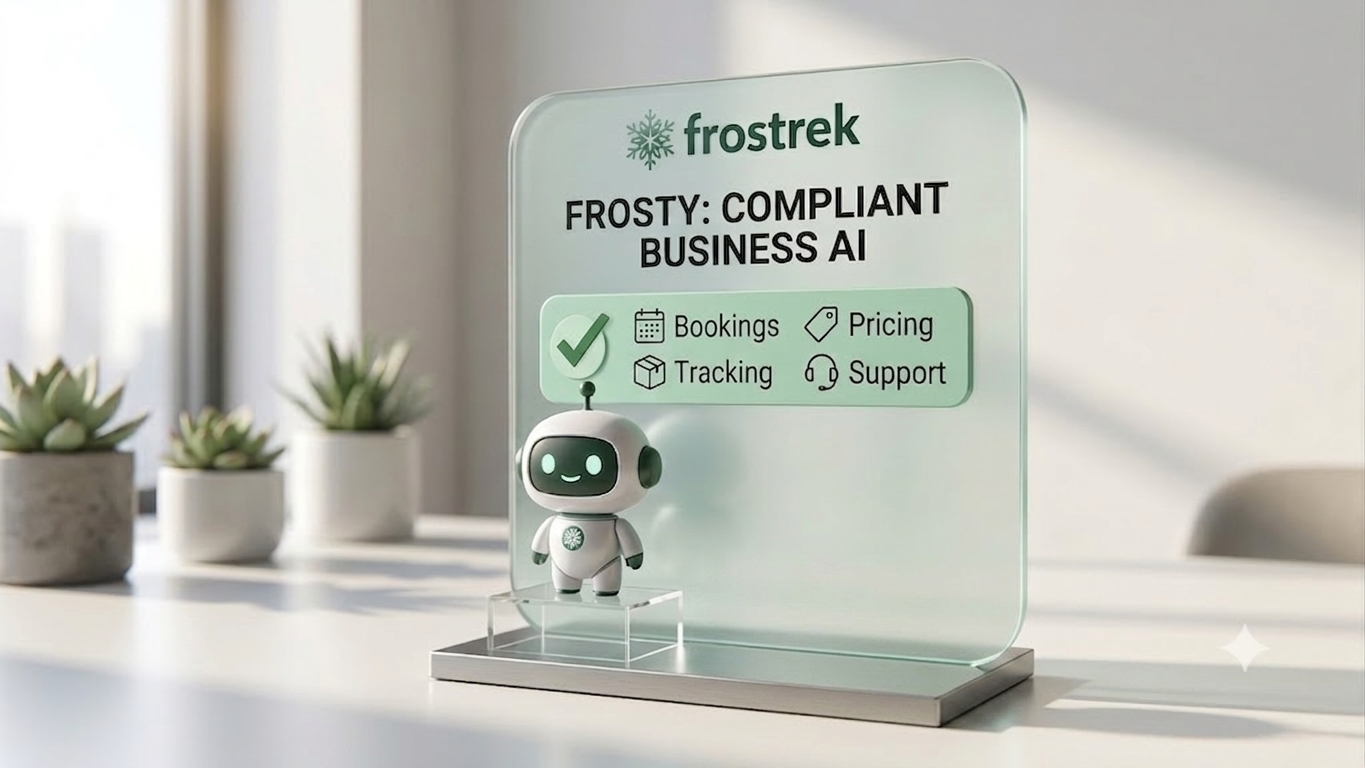
Short version: as of January 15, 2026, Meta banned open-ended, "ask-me-anything" AI chatbots from the WhatsApp Business Platform. Purpose-built business automation — lead qualification, support, bookings, order tracking — is explicitly still allowed. If your WhatsApp AI was doing the former, it's time to check. If it was doing the latter, nothing changes for you.
What actually happened
Meta updated the WhatsApp Business Solution Terms to draw a hard line between two very different kinds of AI on the platform. The rule applied to all new WhatsApp Business API signups starting October 15, 2025, and rolled out to every existing business account by January 15, 2026 — which means it's not a "coming soon" policy anymore. It's already live, and it's already being enforced.
The distinction Meta is drawing:
- Banned: general-purpose AI chatbots — assistants powered by an LLM that will hold an open-domain conversation about literally anything, the same way a ChatGPT- or Perplexity-style assistant does when distributed through WhatsApp. If a customer can ask your WhatsApp number to summarize a PDF, explain a historical event, or write them a poem, that's a general-purpose assistant, and it's now against the terms.
- Still allowed, and clearly encouraged: AI built for a specific business task — qualifying a lead, answering questions about your own products and pricing, booking a meeting, tracking an order, resolving a support ticket. Nothing about this policy restricts AI on WhatsApp. It restricts AI that isn't actually doing business work.
Meta's own reasoning, as reported at the time of the announcement, was straightforward: open-ended assistant bots were generating enormous message volume on the platform without producing anything Meta or the business actually wanted — no bookings, no resolved tickets, no qualified leads, just conversation for its own sake.
Why this matters even if you didn't build your own chatbot
Plenty of businesses aren't running a custom-built ChatGPT wrapper on purpose — they signed up for a WhatsApp automation tool at some point, and it's genuinely worth five minutes to check what's actually happening under the hood. The test Meta itself points to is simple: can a customer ask your bot something totally unrelated to your business and get a real answer? If someone can ask your salon's WhatsApp number about the weather in Tokyo and get a coherent reply, that's a general-purpose assistant wearing your business's name, and it's the exact pattern this policy targets. If the bot politely redirects to what it actually does — booking appointments, answering questions about your services — you're fine.
Getting this wrong isn't a minor issue. Non-compliant use risks disruption to your WhatsApp Business API access, which for a lot of companies is now a primary revenue channel, not a side project.
The upside nobody's talking about
Here's the part worth sitting with: this policy isn't really bad news if your automation was already built the right way. Generic, open-ended chatbots were never great for lead generation or support in the first place — they confused customers who wanted a straight answer about your services, and they diluted the signal your team needed to actually follow up. Meta tightening the rules doesn't shrink what's possible with AI on WhatsApp; it just closes the door on the low-effort, "point ChatGPT at our number and hope" approach that was crowding the channel with noise.
Businesses that were already using AI to do something specific — qualify a buyer, answer a pricing question, book a viewing — were never the target, and they don't need to change anything.
Where Frosty Agent stands
Frosty Agent was built as business-specific automation from day one, not a general-purpose assistant repointed at WhatsApp. It's trained on your own content — your services, your pricing, your policies — and it stays inside that lane: answering real enquiries, qualifying leads, booking meetings, and handing off to a human the moment a conversation needs one. That's precisely the category of AI this policy protects, not the category it targets.
If you're not sure which category your current WhatsApp automation falls into, that's worth a five-minute conversation before it becomes a bigger problem.
[Talk to us about a compliant, business-specific WhatsApp agent →](/products/frosty-agent)
Have questions about implementation? Check our [General FAQ](/resources/faq).
This post reflects Meta's publicly announced WhatsApp Business Solution Terms as of mid-2026. Policy enforcement details can change — check Meta's official WhatsApp Business Platform terms directly for the current, authoritative rules before making compliance decisions.
Ready to build production-ready AI?
Talk to our team about how Frostrek AI can help you deploy enterprise-grade AI solutions.
Book a Demo →